Nikola Tesla
Nikola Tesla

How did Tesla Discover electricity? The idea came to him like a lightning bolt. He sketched rotating electromagnets and induction motors on the path's sandy surface. Tesla invented a brushless electromagnetic motor, the basis for modern-day alternating current power systems, also known as AC motors. Tesla invented the Tesla coil during efforts to develop a "wireless" lighting system, with gas discharge light bulbs that would glow in an oscillating electric field from a high voltage, high-frequency power source.
With funding from investment banker J.P. Morgan (1837-1913), Tesla built a new laboratory and tower to demonstrate his wireless telegraphy at Wardenclyffe, 65 miles from New York City, in September 1902.
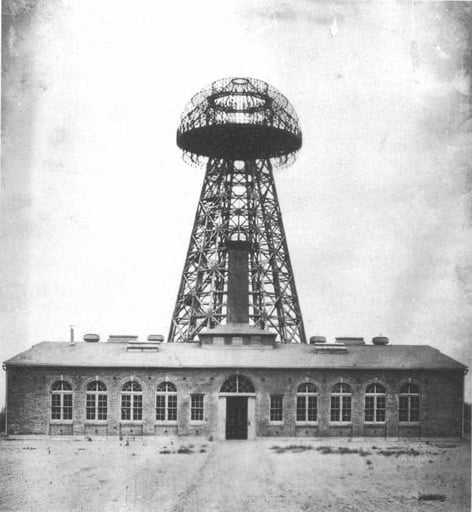
Tesla proposed a plan to Morgan for a “World Telegraphy System”, in which a number of power plants located near urban areas would be connected by wires or cables to the cities nearby. As they received the news, they would spread the messages through the ground to be received by a small device, no larger than a watch. The energy in the earth is sufficient to operate the equipment needed, and the number of devices that could be used is infinite, Tesla argued.
Unluckily for the world, J.P. Morgan withdrew support for Tesla’s plan to transmit worldwide power, believing that the wireless industry had entered a speculative phase. Tesla’s debts mounted.
Struggling with the financial and technical problems in developing his wireless transmitter, Tesla had a mental breakdown in 1905 and never again attempted such an ambitious project.
Tesla was a creative genius, whose visions revolutionized the use of electric power in nineteenth and twentieth-century society. Not limited by conventional thinking, his vivid imagination allowed him to visualize new creations. Importantly, he learned through careful, intense analysis, use of mathematics, and experimentation how to turn his visions into practical inventions.
Tesla’s AC motor changed the American economy at the end of the nineteenth and the start of the twentieth century. It was essential to make electricity a service that could be mass-produced and mass-distributed, allowing companies to increase the size of their systems, pursue economies of scale and reduce the cost of electricity in the long term.

Komentar
Posting Komentar